
Worth County Sex Offender Checks
The Iowa Sex Offender Registry is the first official channel for a Worth County lookup. Iowa DCI runs the statewide system. Search by a person’s name or use the geographic route when the concern is tied to a place. The registry can filter to Worth County, but a county-only search should not be the first move for a name. A person may have moved, may use an alias, or may live just across a county or state line.
The second channel is the Worth County Sheriff. Iowa Code assigns county sheriffs local registration duties, and the Worth office handles those duties at its Northwood headquarters. The sheriff can receive reports of suspected noncompliance and answer questions that a public profile does not resolve. It does not publish a separate county registry map or mobile app. For an address near Minnesota, add the federal national search before drawing a conclusion.
The official Iowa registry screen shows the controls readers use for a Worth County sex offender lookup.
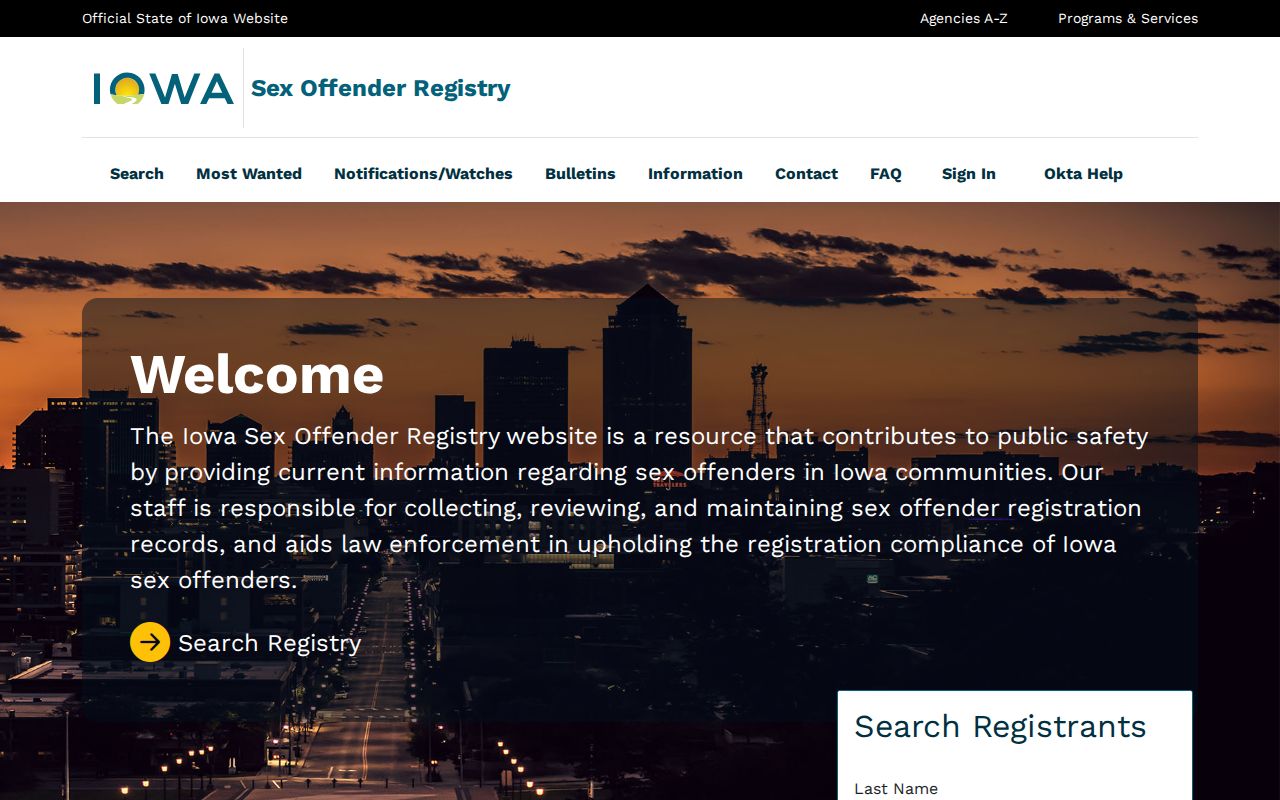
That state screen is the starting point for current public information, while the sheriff remains the local confirmation channel.
Search Worth Offenders Statewide First
Start a name search with County set to ALL. This small choice prevents a common miss. A Worth County connection does not prove that the current registered location is still within the county. Enter the last name, add a first name only when it helps narrow the list, and compare aliases and physical details before deciding that a profile is a match. A common name is never enough on its own.
After the broad search, narrow to Worth County or use the location tools. Read the registration status, offense jurisdiction, and current location as separate fields. A point on a map also needs care because the public site may use a level of address detail set by law. If an expected name is absent, check spelling, aliases, and nearby counties, then contact law enforcement. A blank result does not prove that no duty exists.
Note: A public registry result is a point-in-time subset, not a complete list of every person known to law enforcement.
Iowa Sex Offender Registry Searches
Iowa DCI maintains the public registry and may require acceptance of use terms or a CAPTCHA. The search has person and geographic paths. The fields below reflect the official interface documented for Worth County registry research. Use them in a sequence that tests identity before place.
- Open the Iowa registry, read its warning, and complete any CAPTCHA shown.
- Search the last name with County set to ALL, then add first name or location details to narrow the list.
- Compare aliases and physical descriptors. Do not treat a same-name result as a confirmed identity.
- Open the profile, check its update or verification context, and read offense, jurisdiction, tier, and status separately.
| Field Label | Type | Required | Notes |
|---|---|---|---|
| Search type | Tab or control | Yes | Choose a person/name or geographic route |
| Last name | Text | Route-dependent | Official instructions direct name searches here |
| First name | Text | No | Use it to narrow possible matches |
| County | Select | No | Choose ALL first, then Worth |
| City, ZIP, or address | Text or select | Location route | Supports geographic searches where offered |
| CAPTCHA | Challenge | When shown | Blocks automated access |
Search results remain a public subset. If a Worth County address or profile appears incomplete, confirm the current public facts with the sheriff instead of drawing a conclusion from a missing field.
Worth Registry and NSOPW Compared
The Iowa registry is the primary source for Iowa data. The National Sex Offender Public Website adds a cross-state layer by sending a search across participating jurisdictions. That is useful in Worth County because Minnesota is close and an address question may not stop at the state boundary. NSOPW does not create or independently verify a new record. It relays public registry information supplied by jurisdictions.
Use the Iowa profile for Iowa-specific fields and statutory context. Use NSOPW when a name or place may cross into another state. If the two screens appear to differ, compare their update context and contact the agency responsible for the underlying profile. Do not assume one screen is newer merely because it was opened last.
The national search interface illustrates the wider geographic layer available to Worth County residents.
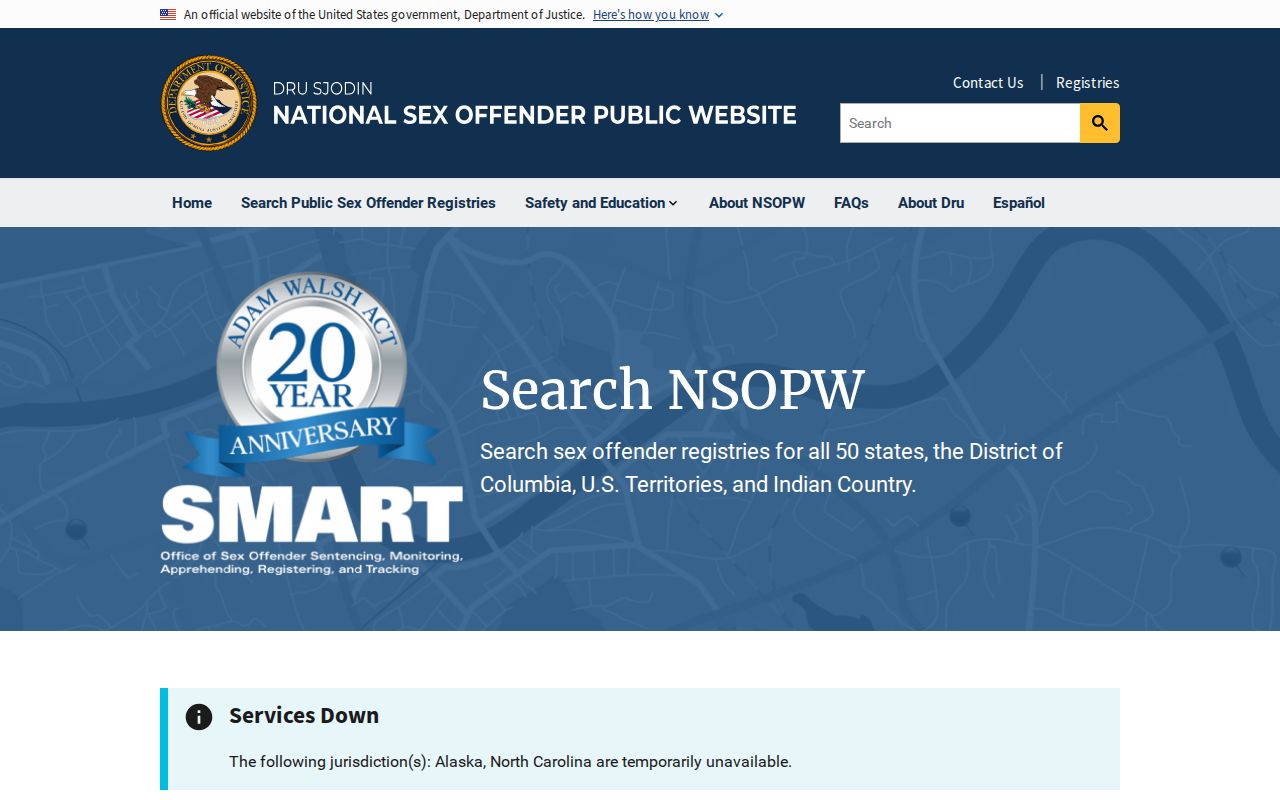
Its value is breadth across jurisdictions, while Iowa DCI and the Worth County Sheriff remain the sources for Iowa registration details.
Registry Profiles: What They Show
A lawful public profile can combine identification, location, offense, and registration data. It is not a full court file or a general criminal-history report. Review the qualifying offense and conviction jurisdiction apart from current registration status. Public visibility depends on Iowa Code chapter 692A, and some information remains available only to law enforcement.
| Name & Aliases | Public identity names and known aliases made available under Iowa law |
|---|---|
| Photo & Description | Photograph plus authorized sex, race, height, weight, hair, eyes, scars, marks, or tattoos |
| Location | Current or temporary address or location detail that chapter 692A permits the public to see |
| Offense & Jurisdiction | Qualifying offense, statute, conviction place, and date where publicly available |
| Tier | Iowa’s administrative classification for registration duties, not a personal risk forecast |
| Registration Status | Current public status and verification context shown by the registry |
Vehicles and other descriptors may also appear when the statute makes them public. Missing details should not be filled with guesses. The originating court holds the case disposition, and a full case inquiry belongs in the Worth County court case lookup.
Worth Sheriff Registration Duties
Iowa Code chapter 692A places local registration work with the county sheriff. In Worth County, the contact is the Worth County Sheriff at 1000 Central Avenue, Northwood, IA 50459, 641-324-2481. The office operates around the clock for dispatch and jail functions, but readers should call before expecting a registration service at any particular hour.
The sheriff’s role includes the local duties set out in §692A.120. Verification frequency depends on tier, while state DCI maintains the central system. Report an apparent address problem or suspected failure to comply to the sheriff or DCI. Give a clear, factual reason for the concern. Do not follow, question, photograph, or confront the person.
Worth County Sheriff
1000 Central Avenue
Northwood, IA 50459
641-324-2481
Local registration questions and suspected noncompliance reports
The Iowa registry law page provides the current statutory framework behind the Worth County Sheriff’s work.
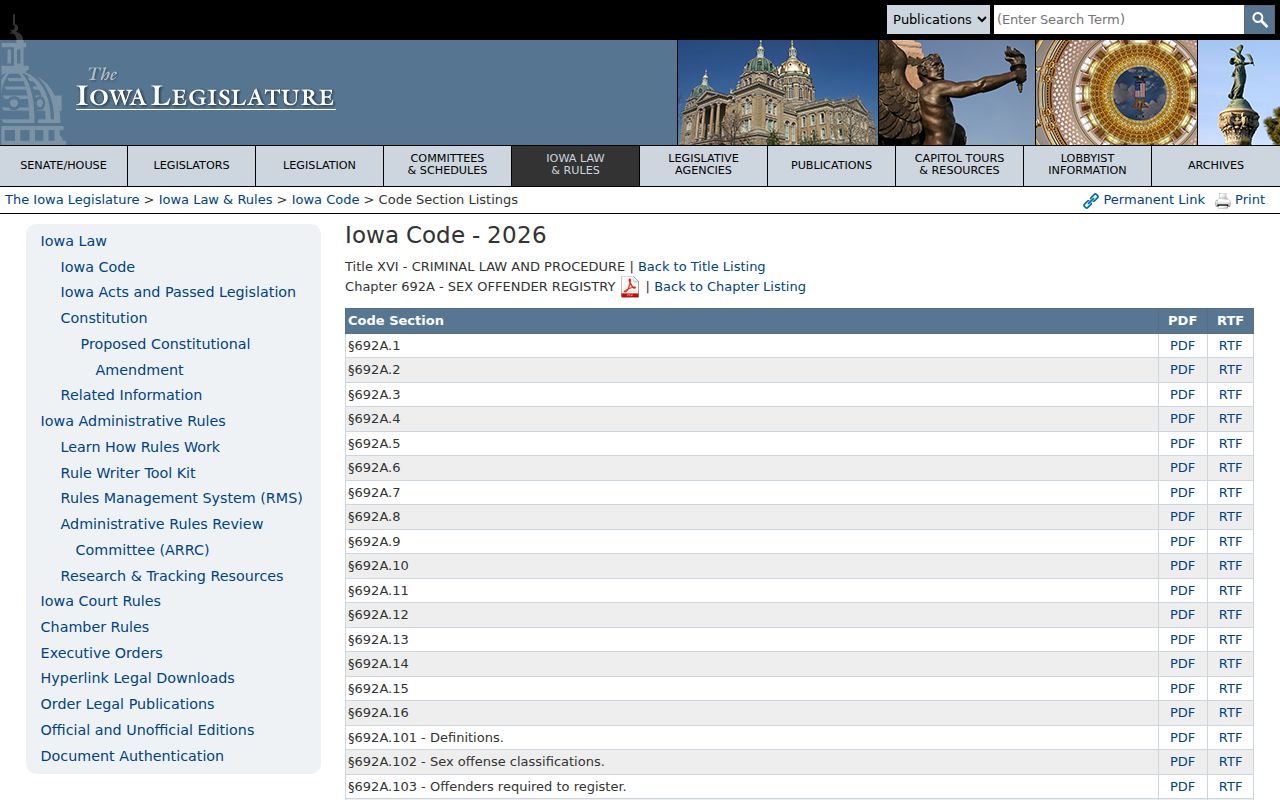
Readers can use that source to check the exact tier, verification, public-access, and sheriff-duty provisions instead of relying on a summary alone.
Registration Levels and Duties in Iowa
Iowa uses three offense-based tiers. These tiers set registration administration, including a general duration and verification schedule. They are not local Worth County risk scores and should never be described as predictions of conduct. Sections 692A.102, .106, and .108 control classification, duration, and verification, while tolling or a special sentence can alter the practical period.
| Iowa Tier | General Duration | General Verification |
|---|---|---|
| Tier I | Generally 10 years | Annual |
| Tier II | Generally 25 years | Semiannual |
| Tier III | Generally life | Quarterly |
Other jurisdictions, tolling, and judicial modification under §692A.128 may affect a specific duty. Public display is a separate issue governed by §692A.121. Do not assume that every person in the same tier has an identical public profile. The precise offense, jurisdiction, and current legal status matter.
Worth County Registrant Watch Alerts
Registrant Watch is Iowa’s proximity-notification option. It can supplement a manual Worth County registry search by sending alerts tied to the enrollment tools available in the live interface. An alert is not a complete history, and it does not replace periodic checks. Address data, compliance status, and the scope of public information can change.
Use an address that matters for personal or family safety, follow the live enrollment directions, and read the alert as a prompt to verify the current profile. When a notice points to an address near a boundary, check the Iowa registry and NSOPW. Contact the Worth County Sheriff if the public information appears inconsistent with observed facts. Law enforcement, not a private searcher, determines compliance.
The Iowa juvenile-record statute is another reminder that public access has firm legal limits.
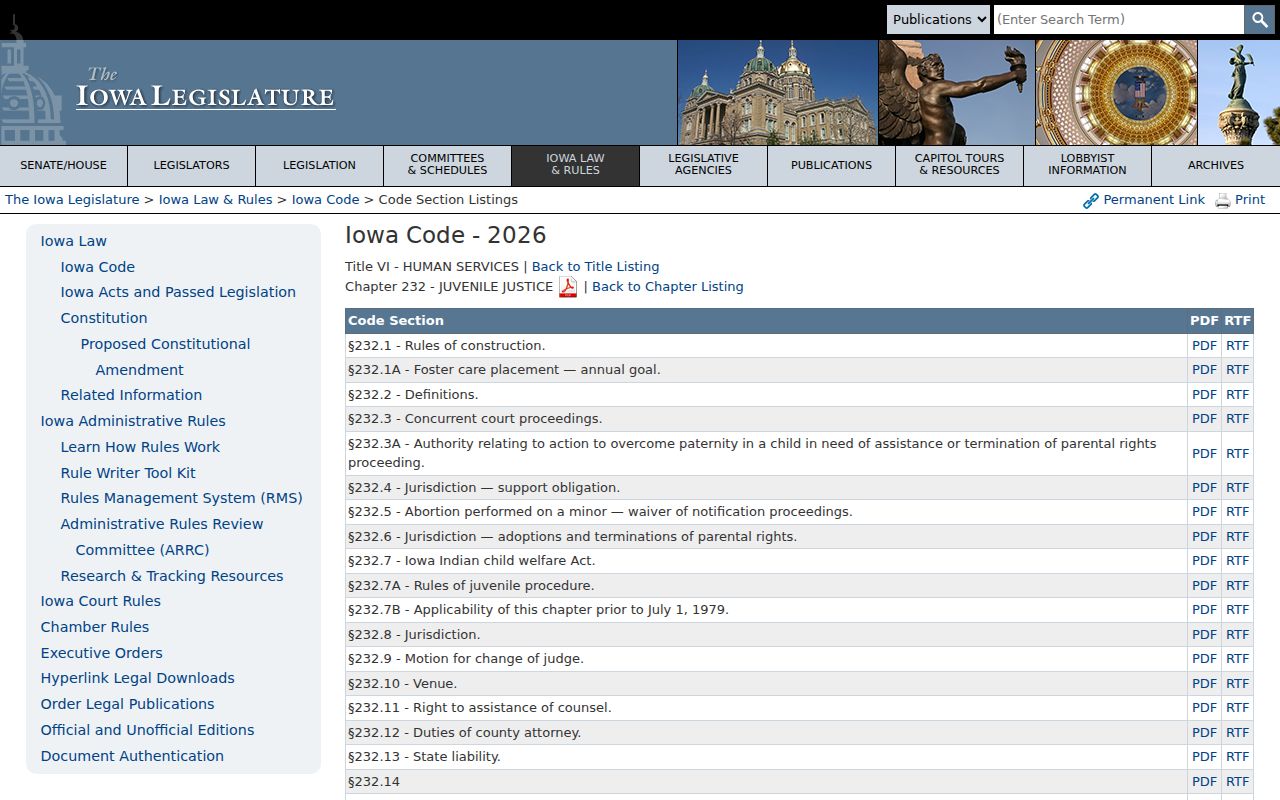
Confidential juvenile information does not become public simply because someone searches a registry or asks for a broad criminal-history file.
Worth Residence Rules and Visibility
Registry visibility and place restrictions are different legal questions. Iowa Code §§692A.113 and 692A.114 address certain residency, presence, child-care, and school-related restrictions. Section 692A.127 limits local government action. A visible Worth County profile does not by itself prove that an address violates a distance rule, and an address that meets a location rule does not erase a registration duty.
Check the exact offense, age-related statutory conditions, and current law before treating a location as restricted. Report a concrete concern to the sheriff rather than trying to measure, investigate, or enforce a boundary privately. The public registry supplies awareness data. It does not deputize the reader.
Iowa’s criminal-history dissemination chapter shows how registry information sits within a broader system of access limits.
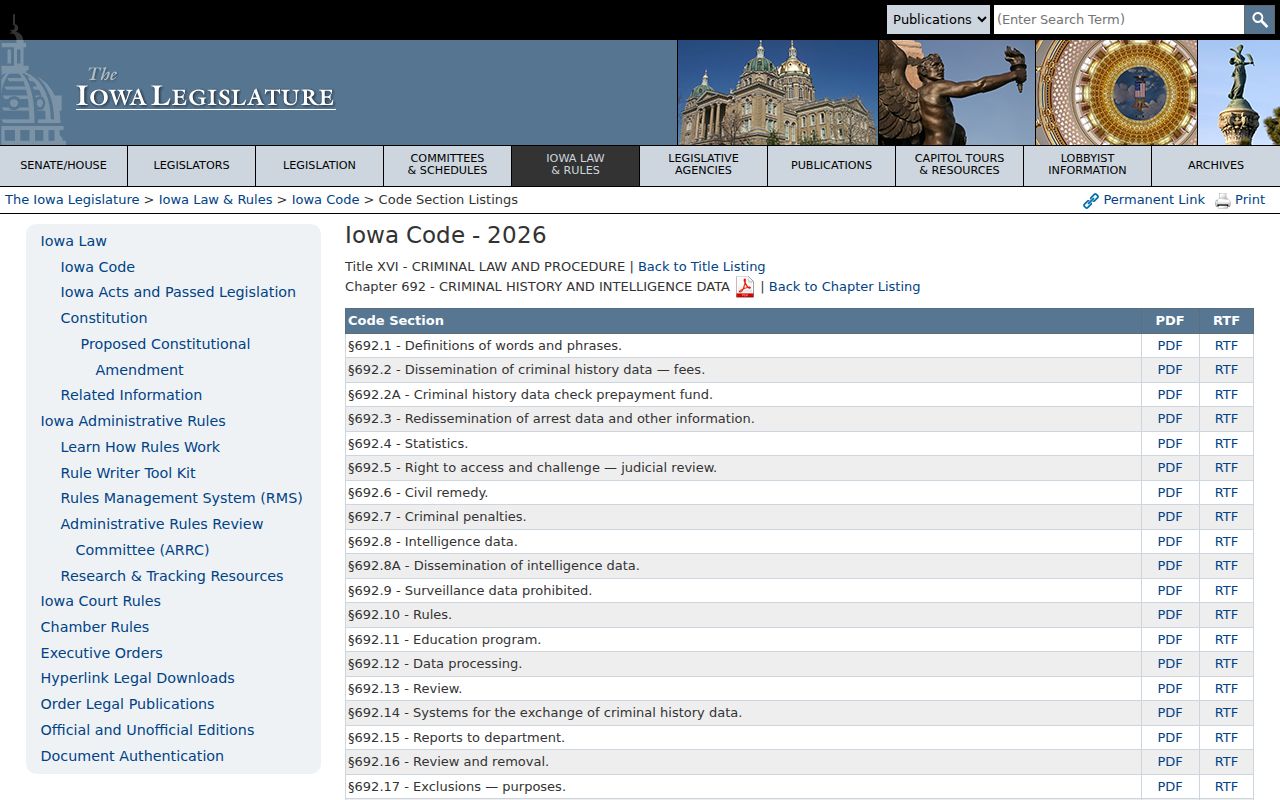
That framework reinforces why a public profile, a court docket, and a repository response should not be treated as interchangeable records.
Worth Registry Noncompliance Reports
When public information appears inconsistent with an address or status, record the specific fact and call the Worth County Sheriff at 641-324-2481. A useful report identifies the profile, the apparent issue, and when it was observed without adding guesses. The sheriff or Iowa DCI can compare public data with law-enforcement-only information and decide whether follow-up is required.
Do not attempt surveillance or seek private records. An old address can reflect a move, a reporting lag, or lawful address treatment rather than a violation. If the concern involves another state, use NSOPW to find the responsible jurisdiction and report it there. The safe sequence is search, compare, report, and stop.
Using Registry Information Lawfully
The Iowa registry supports community awareness and safety planning. It does not invite private enforcement. Use profile data to understand the public record, choose reasonable safety steps, or decide whether to ask law enforcement about an apparent discrepancy. For a missing or possibly stale result, call the Worth County Sheriff or Iowa DCI. Do not confront the listed person or household.
Public access comes from §692A.121, while §692A.113 penalizes prohibited misuse and harassment. Threats, stalking, intimidation, and vigilantism can harm victims, households, and public safety work. A registry tier should also not be restated as a diagnosis or a prediction. It classifies legal duties.
Registry misuse is a crime: Iowa Code §692A.113 prohibits using registry information to commit a criminal act or to harass a registrant or household member. Report concerns to law enforcement and do not confront anyone.